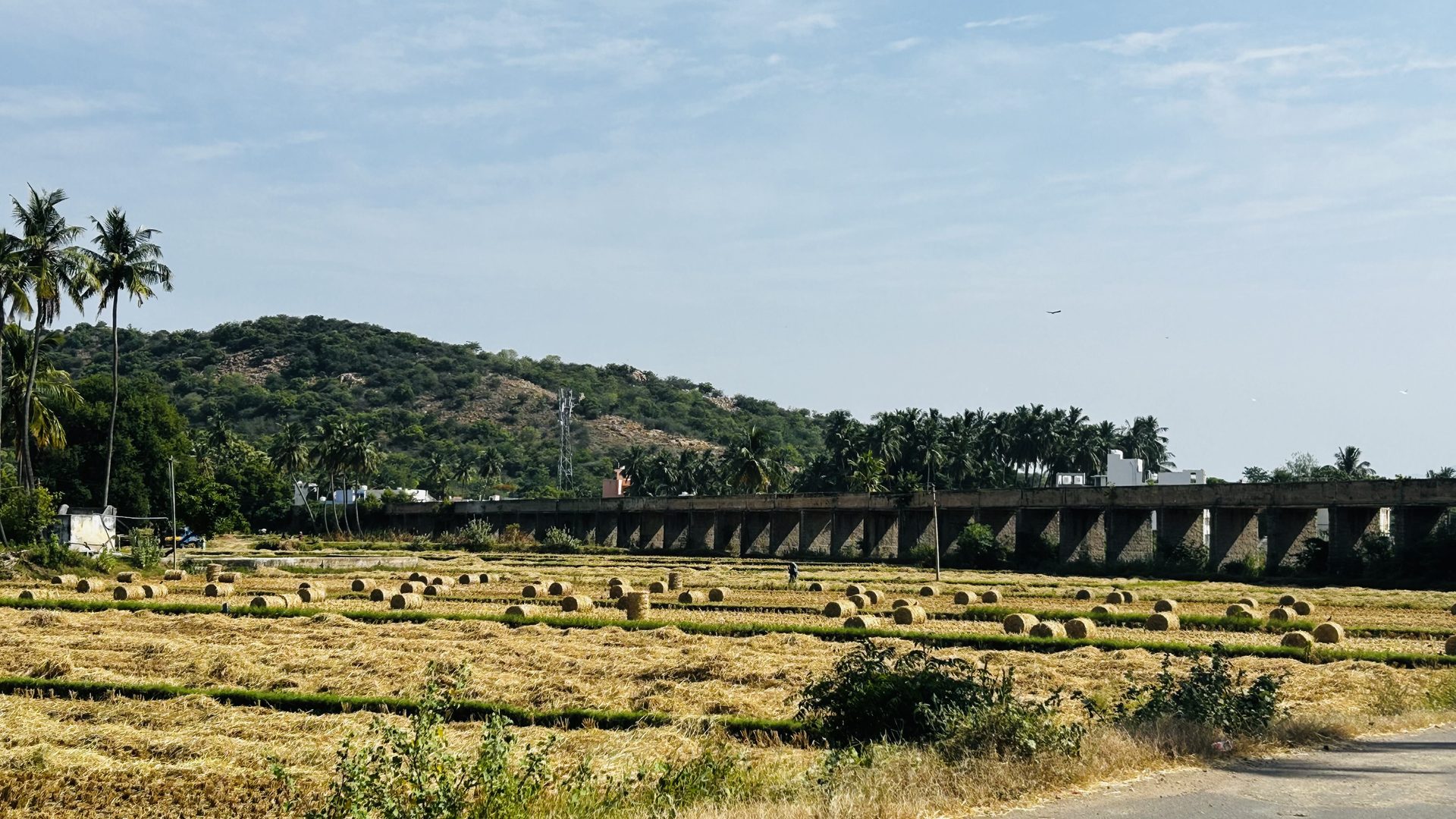
Understanding Carbon Markets and India's Climate Opportunity
A complete guide to how carbon credits work, what the India Carbon Market means for farmers, and how global standards protect integrity.
What Are Carbon Credits?
A carbon credit represents one metric tonne of carbon dioxide (CO₂) or its equivalent in other greenhouse gases, either reduced or removed from the atmosphere as a result of a specific project activity.
When a project, such as planting trees, improving cookstoves, or capturing methane, is independently verified to have reduced emissions by one tonne, one carbon credit is issued. These credits can then be sold to organisations seeking to offset their own emissions.
For a credit to have integrity, it must be: additional (the emission reduction would not have happened without the project), measurable (based on a transparent, approved methodology), permanent (the sequestered carbon does not return to the atmosphere), and verified by an independent third party.
Core Principles of Carbon Credit Integrity
How Carbon Markets Work
Voluntary Carbon Market
- —Open to all organisations, not legally mandated
- —Companies, investors, and individuals offset emissions voluntarily
- —Credits issued under Verra VCS, Gold Standard, ACR, CAR
- —Prices range from $3–$50+ per tonne depending on project type and co-benefits
- —Projects can generate co-benefits: biodiversity, livelihoods, SDGs
Compliance Carbon Market
- —Legally mandated under national/regional regulations
- —Companies must surrender credits to meet emission limits
- —India Carbon Market (ICM) under BEE is a compliance scheme
- —Prices determined by government cap and market demand
- —Non-obligated entities (e.g. farmers, FPOs) can also participate in ICM
The India Carbon Market (ICM)
The India Carbon Market is a government-mandated compliance scheme established under the Energy Conservation (Amendment) Act, 2022, and administered by the Bureau of Energy Efficiency (BEE) under the Ministry of Power.
Under the ICM, Obligated Entities, energy-intensive industries, must meet carbon credit targets. The Carbon Credit Trading Scheme (CCTS) governs trading, allowing obligated entities to buy credits from project developers.
Critically, Non-Obligated Entities, including Farmer Producer Organisations, can develop projects and sell carbon credits to obligated entities. This is where Karimam plays a vital role.
Speak to us about ICM participation →Why Farmers Are the Future of Carbon Markets
Land Scale
India has over 180 million hectares of agricultural land, an enormous opportunity for carbon sequestration through agroforestry, soil carbon, and land use change.
Community Alignment
Carbon projects that benefit farming households create shared incentives for long-term land stewardship, improving permanence and additionality.
FPO Structure
Farmer Producer Organisations provide the aggregation and governance layer needed to develop large-scale, registry-compliant carbon projects.
Global Standards That Protect Integrity
Verra VCS
The world's largest voluntary carbon credit programme. VCS projects use approved methodologies (including VM0047 for agroforestry) to generate Verified Carbon Units (VCUs).
Gold Standard
Focused on sustainable development co-benefits. Gold Standard projects must demonstrate measurable impact against UN Sustainable Development Goals.
India Carbon Market
India's national compliance carbon market. Projects earn Indian Carbon Credits (ICCs) that can be traded on the Indian Carbon Market platform.
Want to participate in India's carbon markets?
Whether you are an individual farmer, a landowner, an FPO, or an NGO, Karimam can help you navigate the opportunity.