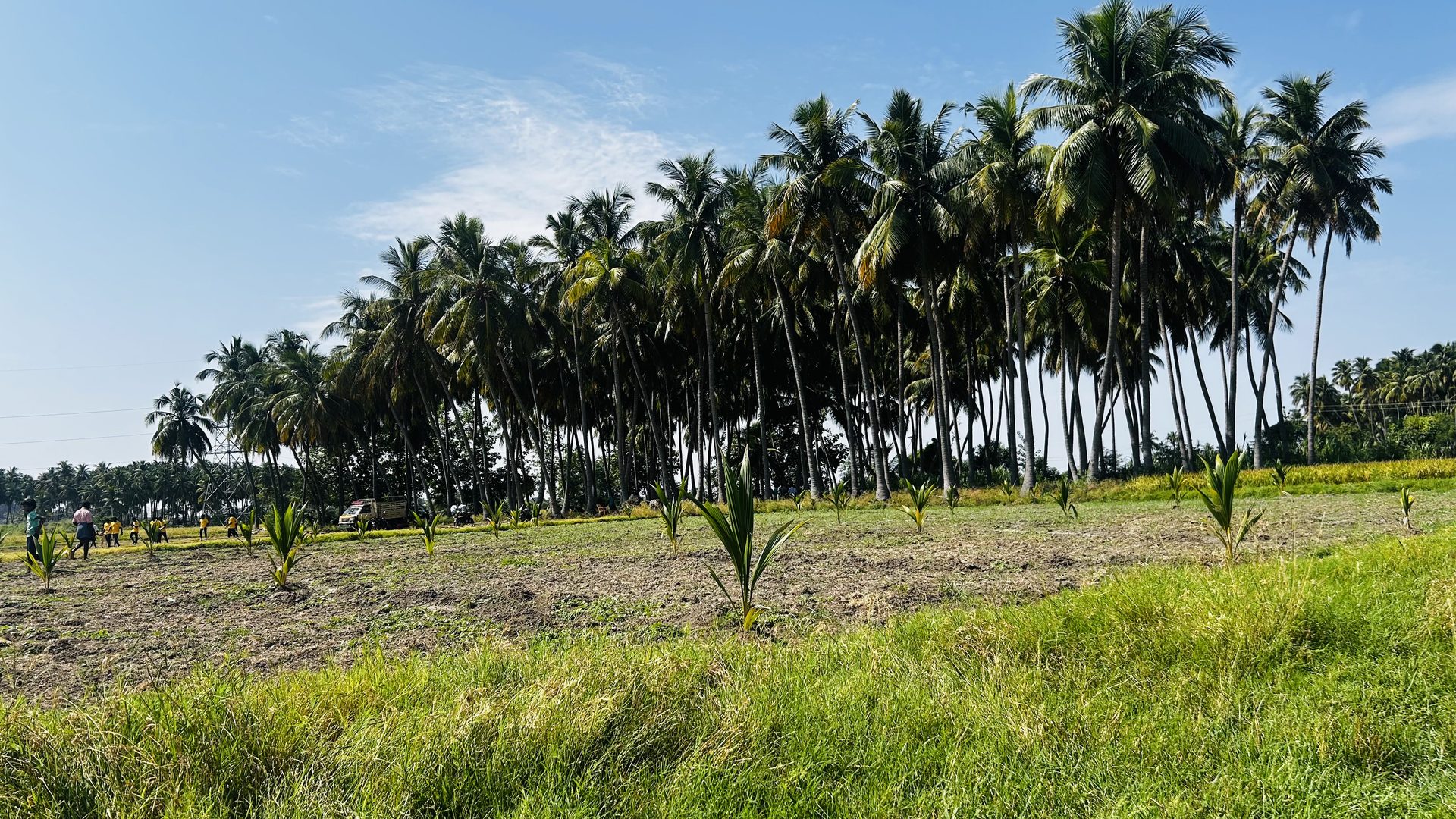
Indian farmland at dawn
Home/What We Do

From Project Development to Market Access

Karimam handles every stage of the carbon credit lifecycle -- from registering a methodology to delivering verified credits to global buyers.

Our ModelProject TypesCarbon AdvisoryFor Farmers & FPOsFor Corporates
Our Model

A Three-Party Ecosystem That Works

No single actor can bridge Indian farmlands with global carbon markets alone. Our model connects three specialist layers into a single, verifiable supply chain.

01
Community Partners

Farmer Producer Organisations

FPOs are the foundation. Member farmers implement sustainable land practices -- planting trees, adopting clean cookstoves, restoring soil -- while continuing their primary agricultural work. FPOs aggregate participation, distribute revenues, and ensure community benefit is documented and verifiable.

  • Aggregate smallholder farmers at scale
  • Manage field-level activity data
  • Distribute carbon revenue to households
  • Act as the accountability layer for MRV
02
NGO Ecosystem

Community & Training Partners

Experienced NGO partners bridge the gap between global carbon standards and local agricultural realities. They handle grassroots outreach, on-ground training, social impact documentation, and baseline data collection that underpins every project's methodology.

  • Farmer mobilisation and capacity building
  • Baseline surveys and social data
  • Ongoing field monitoring support
  • Gender and inclusion data for co-benefits
03
Project Development & Market Access

Karimam Global Ventures

We own the full technical lifecycle. From choosing the right methodology to coordinating third-party validation, managing registry accounts, and placing credits with global buyers -- Karimam connects India's rural ecosystem to international carbon capital.

  • Verra VCS / Gold Standard / ICM registration
  • PDD writing and methodology compliance
  • VVB coordination and validation management
  • Credit issuance, brokerage, and market access
Standards we work with
Verra VCSGold StandardIndia Carbon Market (ICM)Plan VivoAMS-I.EAR-ACM0003
Project Types

What We Develop and How

Each project type follows a specific approved methodology. We select the methodology that best fits the land, the community, and the buyer market -- then build the project to generate credits that pass rigorous third-party verification.

Agroforestry -- trees integrated into farmland
01
MethodologyAR-ACM0003 / VM0047

Agroforestry

We integrate native and commercially viable tree species into active agricultural land. The right species mix locks carbon in biomass and soil while delivering shade, improved microclimate, and diversified income for farmers.

Co-Benefits
Biodiversity & pollinator habitatShade-grown crops command premium pricesReduced erosion and water runoffSDG 13, 15
Eligibility

Minimum 10 ha contiguous FPO land, degraded or monoculture fields preferred

MethodologyAMS-I.E / Gold Standard PoA

Improved Cookstoves

Replacing open-fire cooking with efficient biomass stoves reduces fuelwood consumption by 40-60%. Every stove issued generates measurable emission reductions and immediate health co-benefits for women and children.

Co-Benefits
Reduced indoor air pollutionTime savings on fuel collectionLower household energy spendSDG 3, 5, 7
Eligibility

Rural households using biomass as primary cooking fuel; programme of activities (PoA) structure for scale

Clean cookstove replacing open fire cooking
02
Healthy soil being held in hands
03
MethodologyVM0042 / Soil Carbon Initiative

Soil Carbon Enrichment

Through compost application, cover cropping, reduced tillage, and biochar, we increase soil organic carbon stocks on degraded agricultural land. Soil carbon is one of the most durable and scalable sequestration pathways available to smallholders.

Co-Benefits
Improved water retention and drought resilienceHigher yields without synthetic fertiliserRestored microbial activitySDG 2, 13, 15
Eligibility

Baseline soil organic carbon below 2%, minimum 50 ha aggregate land, willingness to adopt regenerative practices

MethodologyAMS-I.A / AMS-I.D

Renewable Energy Access

Solar micro-grids and biogas digesters displace diesel generators and biomass fuel across rural communities. Projects are structured as community assets, not private installations, ensuring long-term maintenance and equitable access.

Co-Benefits
Reliable electricity for schools and health postsProductive use enabling income-generating activitiesReduced drudgery and kerosene expenditureSDG 7, 10, 13
Eligibility

Off-grid or weak-grid communities, existing diesel dependency, FPO or gram panchayat willing to act as project host

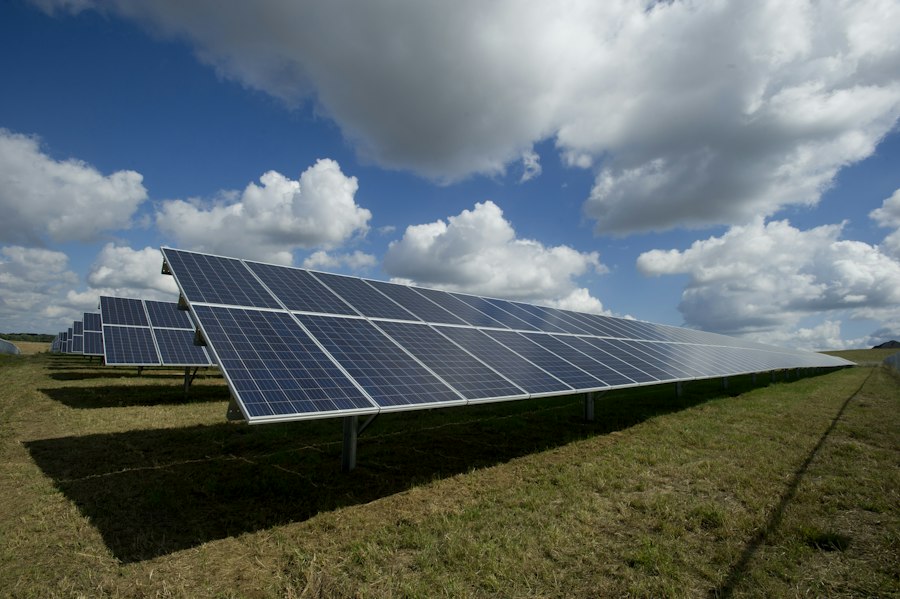
Solar panels installed in rural Indian community
04
Carbon Advisory

Expert Guidance at Every Stage

For companies navigating voluntary carbon markets and investors building carbon project portfolios, we provide independent advisory grounded in project-level experience -- not just policy knowledge.

“The gap between buying carbon credits and actually decarbonising is advice. We help clients close it.”

Carbon Strategy & Roadmap

We help companies and investors map their decarbonisation pathway, identify voluntary vs compliance obligations, set credible net-zero targets, and design a portfolio of carbon credit purchases that stands up to scrutiny.

Portfolio Due Diligence

Before buying carbon credits, companies need to know what they are buying. We assess projects for additionality, permanence, methodology integrity, registry status, and risk of reversal -- and advise on grade and vintage selection.

MRV System Design

Measurement, Reporting, and Verification is the backbone of carbon project credibility. We design data collection protocols, monitoring frameworks, and reporting structures that satisfy VVB requirements and reduce audit risk.

VVB Engagement

Coordinating with accredited Validation and Verification Bodies is complex and time-sensitive. We manage the entire VVB engagement process -- from selecting the right body to responding to findings and coordinating site visits.

Registry & Compliance

We handle account creation, project registration, monitoring report submissions, and credit issuance on Verra, Gold Standard, and India's domestic carbon registry. We stay current with regulatory changes so clients do not have to.

ESG & CSR Structuring

Carbon credits purchased through Karimam can be structured to count toward BRSR disclosures, GHG Protocol scope 3 offsetting, CSR spend under Companies Act 2013, and international frameworks like SBTi and CDP reporting.

For Farmers & FPOs

Your Land. Your Work. Your Revenue.

Farmers and FPOs do not need to understand carbon markets to participate in them. Karimam handles every technical, legal, and commercial aspect. You implement sustainable practices -- we convert them into certified carbon credits and return the revenue.

There is no upfront cost to your organisation. Karimam recovers its project development costs from the credit revenue after issuance. If credits are not issued, Karimam bears the loss -- not the FPO.

What Your FPO Receives
  • Carbon revenue shared directly with FPO and member farmers
  • No upfront cost -- Karimam recovers costs from credit revenue
  • Capacity building on sustainable agriculture practices
  • Access to premium markets through Karimam's buyer network
  • Annual audit reports documenting your community's climate impact
  • Support in meeting ESG reporting requirements for large institutional buyers
Eligibility Criteria
FPO Registration

Your FPO must be registered under the Companies Act or Co-operative Societies Act with at least 50 active member farmers.

Land Base

A minimum aggregate land area of 25-50 ha is required depending on the project type. Land need not be contiguous.

Geographic Focus

We currently operate across Tamil Nadu, Andhra Pradesh, Karnataka, and Telangana. Other states on a case-by-case basis.

Practice Readiness

Member farmers must be willing to adopt and maintain the required agricultural practices for the duration of the crediting period (typically 5-10 years).

Data Availability

Basic record-keeping on member farmer details, land area, and current practices is required to initiate baseline assessment.

Register Your FPO
The Process

From Introduction to First Revenue: Six Stages

01

Initial Assessment

We visit your FPO, meet member farmers, and assess land suitability, existing practices, and baseline data availability. No cost to the FPO at this stage.

02

Project Design

Karimam designs the project structure, selects the methodology, and begins baseline data collection with your NGO partner. We handle all technical documentation.

03

Registration

We register the project with the relevant carbon registry (Verra, Gold Standard, or ICM) and manage the validation process with an accredited VVB. Timeline: 6-12 months.

04

Implementation & Monitoring

Farmers implement the agreed practices. Karimam provides monitoring tools and training. Annual data collection feeds into verification reports.

05

Verification & Issuance

A VVB audits implementation and certifies emission reductions. Credits are issued to the registry account and readied for sale.

06

Revenue Sharing

Net revenues from credit sales are shared with the FPO under a pre-agreed formula. FPOs receive payment directly to their bank account, with full transaction transparency.

For Corporates & Investors

Buy Credits That Hold Up to Scrutiny

The corporate carbon market is under scrutiny. Credits that seemed credible five years ago are being questioned today. We develop and source credits that are built to a higher standard from the start -- documented at the field level, independently verified, and registered on major international registries.

For Indian companies with BRSR obligations and CSR mandates, we offer a straightforward path to sourcing high-quality domestic credits that satisfy both climate commitments and regulatory requirements.

100%
Credits from registered, verified projects
Registry-retired
Every credit retired in your name on Verra or GS registry
South India
Geographic focus -- local supply chain alignment for Indian buyers
BRSR-ready
Full documentation package for India's mandatory ESG disclosures
ESG & CSR Use Cases

Scope 1 & 2 Offsetting

Residual direct emissions and purchased energy that cannot be eliminated through efficiency or renewable energy procurement can be offset with high-quality credits from our portfolio.

Scope 3 Supply Chain

Agricultural and rural supply chains in India carry significant embodied emissions. Sourcing credits from the same communities you source from creates a compelling, verifiable climate narrative.

BRSR & ESG Reporting

India's Business Responsibility and Sustainability Report (BRSR) framework requires listed companies to disclose emission reduction activities. Our credits come with full audit trails for compliance reporting.

CSR Spend (Companies Act)

Carbon credit projects with farmer communities qualify as Schedule VII CSR activities under environmental sustainability. We provide the documentation required for MCA compliance.

Net-Zero Claims

We structure credit portfolios aligned with Science Based Targets initiative (SBTi) guidance, ensuring your net-zero claims are credible and defensible to stakeholders and rating agencies.

Climate Disclosures (CDP / TCFD)

Our credits are from registered, verified projects. We provide the project documentation, issuance certificates, and retirement records needed for CDP and TCFD-aligned climate disclosures.

Procurement Process

From Enquiry to Registry Retirement in Four Steps

01

Requirement Scoping

We assess your emissions inventory, reporting obligations, and buyer preferences to recommend credit type, vintage, co-benefit profile, and volume.

02

Portfolio Proposal

Karimam presents a curated shortlist of projects from our pipeline or registry inventory, with project documentation for due diligence.

03

Pricing & Terms

We offer fixed-price forward contracts or spot market procurement. Pricing is transparent -- we do not hide margins in opaque structures.

04

Retirement & Reporting

Credits are retired in your name on the registry. We provide retirement certificates, serialised credit details, and reporting summaries for your disclosure team.

Start Procurement Conversation

Ready to begin? We are.

Whether you are an individual farmer, a landowner, an FPO, or an NGO, there is a role for you in our ecosystem.